
From sickle cell disease to multiple sclerosis and childhood leukemia, patients and advocates reflected on becoming pioneers in therapies that are changing medicine.
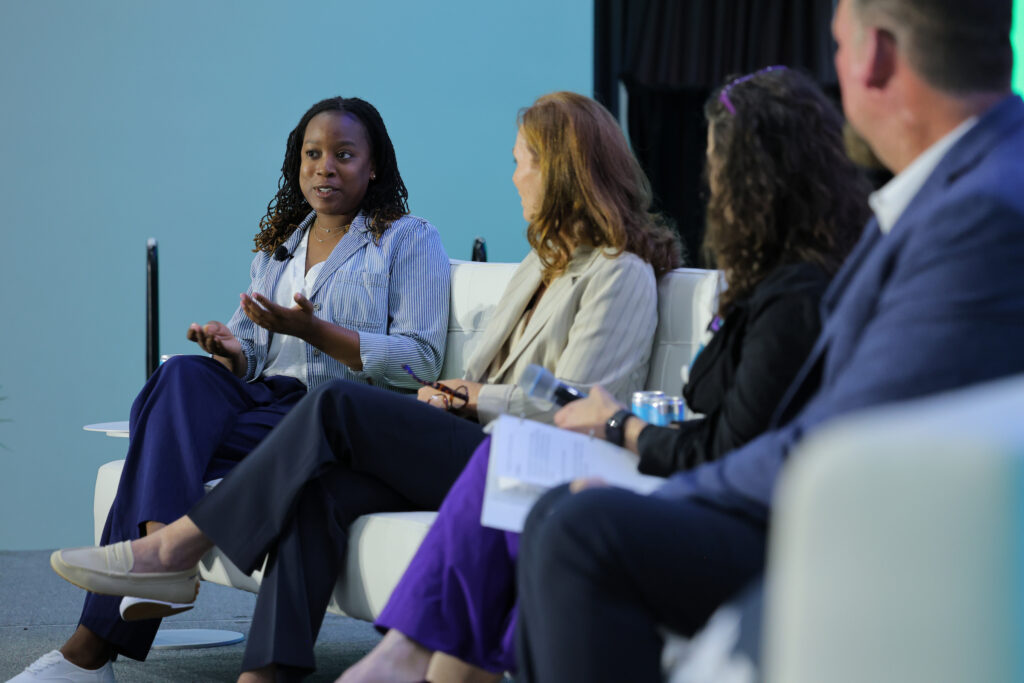
For most of her life, Jennelle Stephenson was the girl who was sick all the time. Born with sickle cell disease, she grew up with a set of rules: don’t get too cold, don’t get too hot, drink a gallon of water a day, always know where the nearest hospital is. Pain was simply the weather of her life.
“I didn’t know any different,” she said. “That was my normal.”
So when, after 26 years, she found a clinical trial for a gene therapy no one with her condition had ever received, the decision was clear.
“It wasn’t necessarily me choosing between safety and risk,” Stephenson told the audience at a panel at the 2026 BIO International Convention featuring patients who had each been the first, or among the first, to undergo a transformative cell or gene therapy. “It came down to me choosing between two uncertainties. What was certain was that I was living 26 years in pain, and that had to change.”
Eight and a half years later, she has not had a single sickle cell crisis – not one.
The strangest part, she said, was the absence of the identity that had come with it. “Sickness had been a place to hide,” she explained. “When that was taken away, I was left with myself, and I didn’t know who I was.” She has spent the years since figuring it out, with three Italian greyhounds, two cats, and the Tennessee mountains where she now hikes.
“I am alive today because of biotech,” she said.
‘You do the extreme things, because that’s the path of hope’
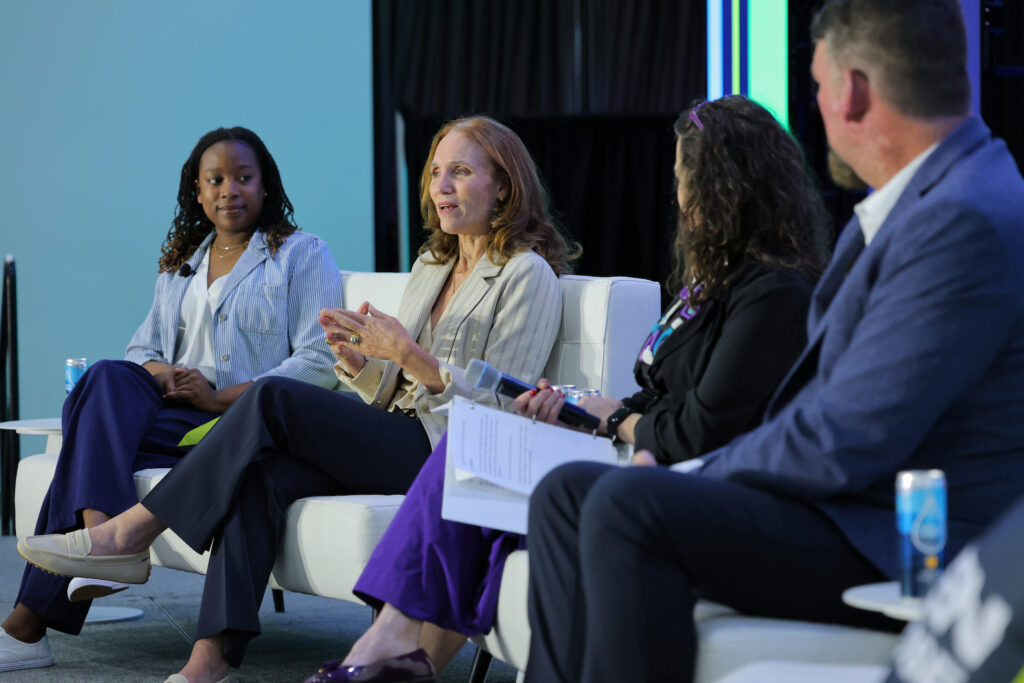
Beside Stephenson sat Marci McCue, the first patient to receive CAR-T therapy in a clinical trial for multiple sclerosis (MS). When her MS began moving fast, McCue refused to wait, proactively reaching out to neurologists requesting clinical trials.
The way she explains the decision to go first has the logic of someone who had already done the math. “If somebody told you you were going to die in a car accident, you would probably take extreme measures to just not get in a car,” she said. “So you do the extreme things, because that’s the path of hope.”
She remembers the moment her diagnosis stopped being a secret. Her teenage daughter was studying gene and cell therapy in a high school biology class, in a coffee shop, just as McCue was going to be the first patient in the clinical trial. “I said, that’s exactly what I’m doing,” she recalled. “And she just starts crying, and then I’m crying. But it’s okay, because I have a solution now. We have an answer.”
What changed for her, she said, is the kind of thing science struggles to measure: “Now that worry is gone, and I can give my children a path forward.”
The world’s first pediatric CAR-T patient for leukemia
The third seat belonged to Tom Whitehead, whose daughter Emily became the world’s first pediatric patient to receive CAR-T cell therapy for leukemia. Emily was five, and her family faced a choice between taking her home for hospice and trying a therapy no child had ever received.
“It didn’t take us very long to sign the consent,” Whitehead said.
Just 23 days after her infusion, Emily was cancer-free.
She is considered cured today, in a case that helped spark a cancer immunotherapy revolution that has since benefited more than 50,000 patients worldwide. The Whiteheads built a foundation around a single phrase, “hope over hospice,” and in the past year alone, they have helped 40 families find an advanced-therapy trial instead of giving up.
Whitehead still works full-time as a power lineman. “I didn’t realize the impact it would have on so many others,” he said. “But I’m very glad that it did.”
Why early gene and cell therapy patients keep advocating
None of them treated being first as the end of the story. “I’m patient one. That means there’s going to be more, and that there needs to be more,” McCue said. “If we don’t keep pushing, if we don’t keep building on these experiments, we won’t ever get to that big breakthrough where a cure is possible, where it’s affordable, where it’s accessible.”
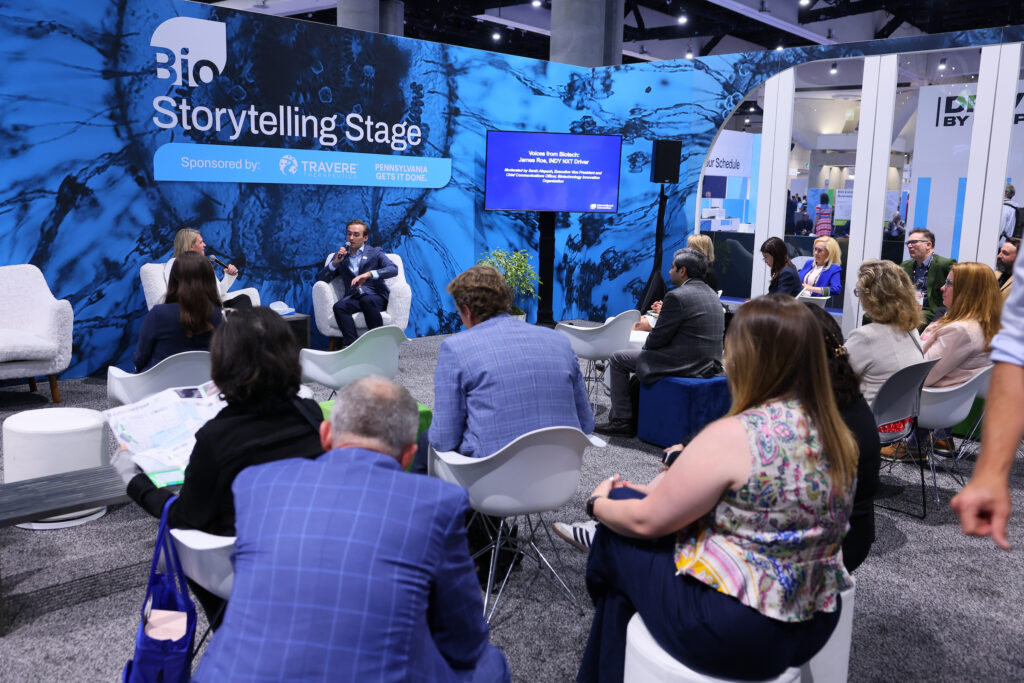
That conviction – that going first is about the people who come next – ran through the convention beyond the panel. On the Storytelling Stage, INDY NXT driver James Roe, who has raced at the top of motorsport while managing type 2 asthma since childhood, drew the same line between his sport and the science around him.
“In racing, we’re constantly refining our engineering, analyzing performance data, and chasing our approach to gain every possible advantage on track,” he said. “Managing my asthma diagnosis has also come in stages over my career, and with the help of fitness and medication, I’ve adapted to high-intensity environments where my heart rate can often average more than 130 to 150 beats per minute.”
These are the stories BIO’s Fight of Our Lives campaign was created to share: the human face of an industry marking 50 years of breakthroughs, with McCue among its featured patients.
For the patients who went first, the breakthrough has already arrived. What they ask of the industry is that the next ones not have to wait as long.
Roe put that charge to the room directly: “The work happening in biotech today isn’t just about what’s next in science; it’s about what’s next for people, it’s about opening doors, expanding limits, and giving people a chance to chase goals they often hadn’t thought possible,” he said. “So, I challenge you to continue to innovate your purpose. Think about the person on the other side of every breakthrough, every trial, and every decision. Someone’s life can be completely transformed by your work.”