Skip to content


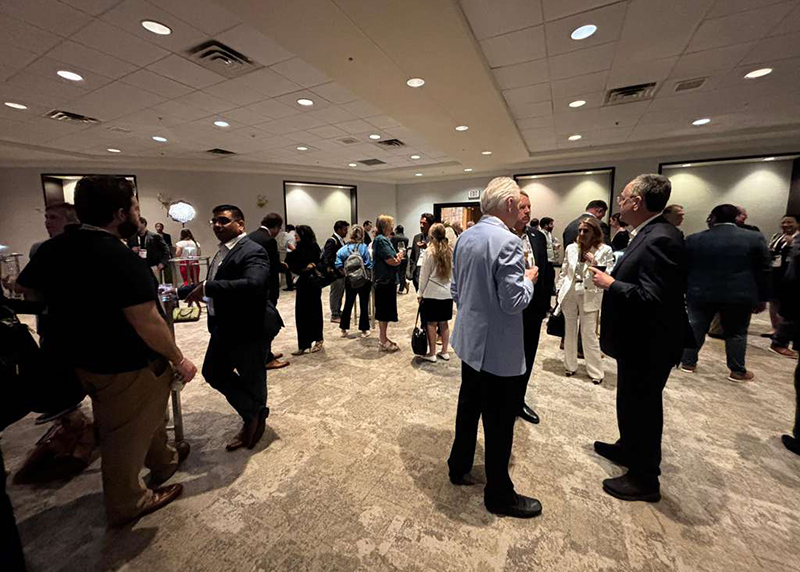
The inaugural BIO Investment and Growth (BIG) Summit was a chance for leaders in the biotech industry to catch up on domestic and international policy trends and market developments—and to build the partnerships that will drive future innovation.
Bio.News was on the ground throughout the March 2-3 event in Miami. Here are some of the biggest takeaways from the week.
The resilience of biotech markets
“If you look at overall venture investment in healthcare in the U.S. and Europe, it’s an interesting story,” said Jonathan Norris, Managing Director at HSBC Innovation, during a panel, Navigating the New Normal: Venture Investment Trends.
2021 was the apex of venture funding, setting records across almost every metric the industry could imagine: deals, dollars, M&A, IPOs, etc. “And that stayed pretty strong in the first half of 2022,” he added, “but by the second half of 2022, you started to see the storm cloud gather. Valuations were starting to be under pressure. The IPO market started to get a little bit more difficult.”
By 2023, the industry was in a period of retrenchment, with the goal post having moved for what a value inflection point was for the next round of investors. By 2024, investment began to pick up with mega rounds. This was all despite headwinds from a number of policy and global trade developments that threatened to cool growth.
As another panel, M&A and Licensing in the Year Ahead, explored, however, the industry did not slow down. It refocused to drive growth, looking to the private biotech market to generate sales.
As Chris Dokomajilar, Founder and CEO at DealForma, explained, 2025 was a big year for mergers and acquisitions, with 4,341 deals, up from 3,883 in 2024, and total deal value of $606 billion, up from $421 billion in 2024.
And one of the greatest success stories of last year was Intra-Cellular Therapies’ sale to J&J for $14.6 billion at the start of 2025.
Now, in 2026, experts are expecting a “return to normalcy,” said panelist Andrew Rymer, of Centerview Partners.
MFN at BIG
The Most-Favored Nation (MFN) policy was top of mind for everyone at the BIO Summit.
At a session titled “Seeking Opportunities While Navigating Risks of Global Trade,” panelists noted that MFN and tariff disputes have created uncertainty, forcing some American companies to pause before jumping into global partnerships.
“We have seen more and more companies say the regional deal may not be worth it,” added Daniel Brog, a Managing Director at global investment bank Locust Walk. “If the U.S. company now has to worry about destroying the value of the U.S. market by agreeing to a much lower price elsewhere, they’re going to give that right up.”
During the Washington Policy Briefing, panelists noted that the industry is doing a great deal of work to educate policymakers as to why drug price controls don’t work.
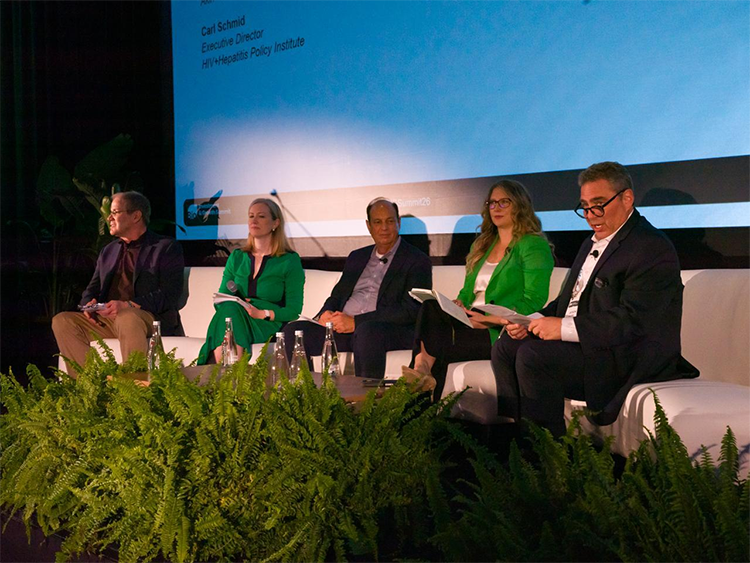
“With MFN, they’re looking at the list price of the drugs in other countries,” explained Carl Schmid, Executive Director at HIV+Hepatitis Policy Institute. “It just doesn’t make any sense. We don’t price our hospital bills based on other countries.”
Patients first
Panels at every session sang the refrain that biotech lives by: patients first to drive innovation and policy.
“For the patient community, we just have to continue to speak up and fight and say, we need more treatments. We need cures. We need a vaccine that works,” said Schmid. “Better treatments, cures, vaccines make America healthy.”
Sharon Mates, Former CEO & Chair at Intra-Cellular Therapies, echoed the sentiment when discussing her decision about whether to sell to J&J.
“When you have an interested party, [you have to ask yourself], what is the best route? What’s the best for patients?” Mates said. She ultimately decided that selling her company would ensure that more patients would have access to the mental health drugs they needed.
In the lead up to the BIG Summit, Nicole Schwerbrock, Associate Director of IBD Venture Investments at the Crohn’s & Colitis Foundation (and participant in the The High-Impact Investment Landscape in Immunology & Inflammation session), asked: “How does effective science translate into something that truly reaches patients?”