
Executives at BIO 2026 said biotech partnerships, licensing deals, and acquisitions remain strong as companies adapt their business development strategies to navigate policy, regulatory, and geopolitical uncertainty.
From billion-dollar acquisitions to early-stage collaborations, biotech dealmaking is showing renewed momentum despite an increasingly complex policy and regulatory environment.
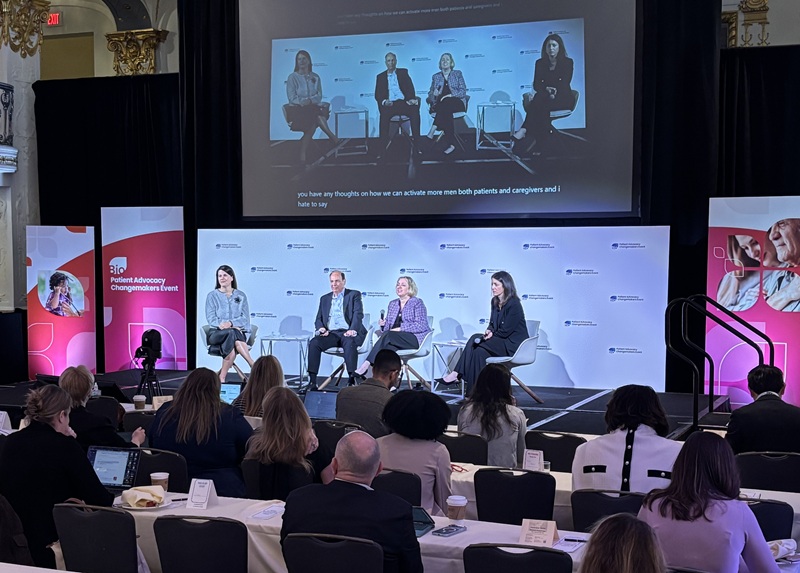
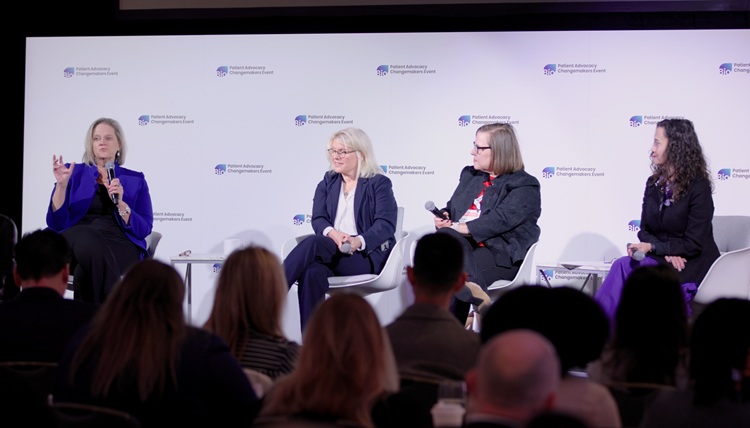
On Day 1 of the 2026 Biotechnology Innovation Organization (BIO) International Convention in San Diego, two sessions examined both sides of the equation: how companies are navigating uncertainty in today’s market, and how smart business development can create opportunity even in challenging conditions.
That focus on biotech dealmaking is one reason thousands of executives, investors, and business development leaders have gathered in San Diego this week. While policy uncertainty dominated many conversations, speakers repeatedly emphasized that partnerships, licensing agreements, acquisitions, and strategic collaborations remain the engine that moves innovation from the lab to patients.
And despite uncertainty, deal activity remains robust.
Anamaria Sudarov, Ph.D., Managing Director at Wells Fargo, pointed to a broad range of transactions taking shape across the industry.
“What that represents is what we have seen, really frankly – starting in Q4 2025 and in the first two Qs of 2026 – an incredibly broad spectrum of the type of transactions and deals getting done,” she said.
Those transactions range from targeted discovery collaborations to multi-billion-dollar acquisitions. However, the most active area remains bolt-on transactions in the $1–5 billion range, where acquirers are seeking deals rooted in specific assets, particularly those with mid-stage clinical data, noted Sudarov.
The challenge is that biotech dealmaking today must account for risks that are difficult to quantify.
Asked how geopolitical and policy uncertainty is being incorporated into transactions, Chad Diehl, J.D., Legal Team Lead, Licensing & Acquisitions and Alliance Management at Astellas Pharma, said companies are wrestling with variables that are impossible to model with certainty. Buyers still want to do deals and have tools to bridge valuation gaps, but both sides need to recognize that significant uncertainty could materially affect the economics of a transaction.
“Because it’s an unknown, it’s not flowing through to the financial valuation that’s on paper,” said Diehl. “What the market is today, it wasn’t 10 years ago. And it’s not what it’s going to be in five years.”
How biotech companies can seize dealmaking opportunities
But uncertainty has not eliminated opportunity.
Speaking to Bio.News after her session, Casarine Chong, J.D., MBA, General Counsel, R&D, Business Development and Strategy at CSL, emphasized the importance of adaptability.
“For biotech firms with global aspirations, it’s important to stay nimble and agile. Whether it is dealing with new strategies in accelerating development globally, adapting to regulatory requirements, or addressing the ever-evolving geopolitical nature of our environment, they need to stay adaptable and flexible, positioning themselves to be the partner of choice and establishing their own global footprint to become a commercial-stage company.”
In a separate session focused on business development, executives shared lessons from deals that helped transform their organizations.
Joseph Lasaga, EVP and Chief Business Officer at Rigel Pharmaceuticals, argued that speed can be a competitive advantage.
“Be in the front of the line at all times,” he said.
Austin Hackett, VP of Business Development at Innoviva, encouraged companies to look in “under-prioritized areas,” especially if you’re “the only one there.”
Jesse Shefferman, co-founder, director, and CEO of Protara Therapeutics, emphasized the importance of credibility and authenticity during negotiations.
“One of the traps you can fall into is posturing that you’re bigger or better or more well-funded than you actually are,” Shefferman said. “I think showing up authentically human in this field that’s governed by dollars and cents goes a long way.”
Casey Flores and Tom Popper contributed to this report.