Skip to content


Maintaining a world-leading biotech industry keeps Americans safer and its economy stronger. Appropriate federal actions can support this leadership, the Biotechnology Innovation Organization (BIO) said in a statement to Congress.
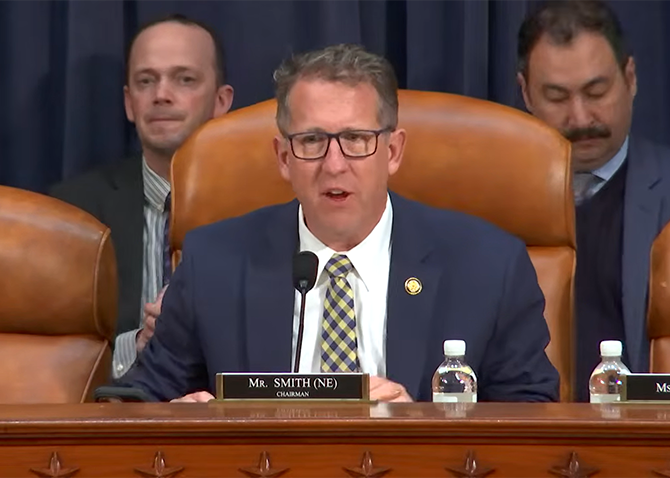
BIO explained the importance of biotech, and broke down strategies to help the industry thrive, in a statement for the record submitted for the Jan. 13 House Ways & Means Trade Subcommittee hearing on “Maintaining American Innovation and Technology Leadership.”
The biotech industry “has experienced explosive growth, with the global biotech market projected to reach $4.25 trillion by 2033, largely led by U.S. firms,” according to the statement. “This leadership ensures access to advanced medical treatments, supports American jobs, and drives exports.”
What Congress can do
BIO’s statement outlined key opportunities for the federal government to support American biotech:
Supercharge the business environment for U.S. emerging biotechnology companies: BIO commended Congress for restoring federal R&D tax credits through passage of the One Big Beautiful Bill Act and recommended further action in this area. A Federal Angel Investor Tax Credit, modeled after state programs, would incentivize high-net-worth individuals to invest in emerging biotech companies, BIO said. Also, new partnership structures would allow high net-worth individuals to enter joint ventures with emerging biotechs and take advantage of flow-through tax credits and losses.
Empower U.S. biotechnology contract manufacturing: Legislation can support reshoring drug manufacturing by:
- Providing incentives—such as tax credits, access to capital, or patent term extensions—for biotech companies choosing U.S. contract manufacturers.
- Offering funding and tax incentives for translational programs that adopt advanced manufacturing technologies and pilot-scale facilities in emerging modalities such as cell and gene therapy or mRNA.
- Expanding government-backed grant and credit tool programs tailored to biotechnology manufacturing projects.
- Incentivizing contract manufacturers serving low-volume contracts or orphan sponsors with preferential tax rates.
- Providing new financial incentives for contract manufacturers, such as tax credits, targeted grants, or partial loan forgiveness for capital-intensive investment.
- Providing grants or tax incentives to reward fully integrated contract manufacturing campuses that bring end-to-end capabilities under one roof.
- Ensuring key resources are available through funding mechanisms and tax credits for upstream suppliers of critical biotechnology manufacturing equipment and materials.
- Creating a National Strategic Biomanufacturing Priority List for long-lead manufacturing equipment and critical materials, with incentives for domestic sourcing and oversight of priority procurement.
- Promoting development of regional clusters anchored around biotech contract manufacturing through incentives for shared infrastructure, workforce, and collaborative innovation.
- Working with state and local governments to offer land grants and site development incentives for contract manufacturing in underutilized economic development zones.
Support the wider U.S. manufacturing and services ecosystem: Legislation in this area would provide mechanisms that reduce the cost of capital and encourage investment in U.S.-based manufacturing. Modernized tax incentives could support orphan drug development, give benefits for domestic biomanufacturing, and encourage manufacturing investment.
Incentives and support mechanisms for biotechnology workforce growth and development: “The Federal government can foster closer collaboration among scientists, engineers, and skilled technical workers, and better integrate training pathways, by incentivizing the creation of regional biomanufacturing hubs,” according to BIO’s statement. Such a program could encourage additional biotechnology manufacturing using the example of the existing Tech Hubs Program of the U.S. Economic Development Administration.
Reinforce and expand global trade cooperation: The March 2025 report of the National Security Commission on Emerging Biotechnology (NSCEB), chaired by Sen. Todd Young (R-IN), highlighted the importance of “cross-border collaborations with allies and partners,” that expand market access, address regulatory bottlenecks, and stimulate demand for biotech products. This can be achieved with new bilateral agreements to eliminate tariffs on biopharmaceuticals and strengthen IP protections with trusted partners, like the EU, UK, Japan, South Korea, Switzerland, India, and Canada.
Federal oversight and coordination of the biotechnology ecosystem: To facilitate maximal effectiveness of these actions, Federal oversight and coordination of interagency actions supporting biotech could be led by an interagency task force or a National Biomanufacturing Strategy Office.
BIO’s comments concluded with a commitment to government-industry cooperation to further biotech: “We stand ready to work closely with Congress to continue to create a clear, sustainable, and predictable policy environment that will encourage increased scientific advances in health for all Americans.”