
China gains a huge advantage in biotech competition by speeding up clinical trials, and America must respond, a member of the Board of the Biotechnology Innovation Organization (BIO) testified in Congress.
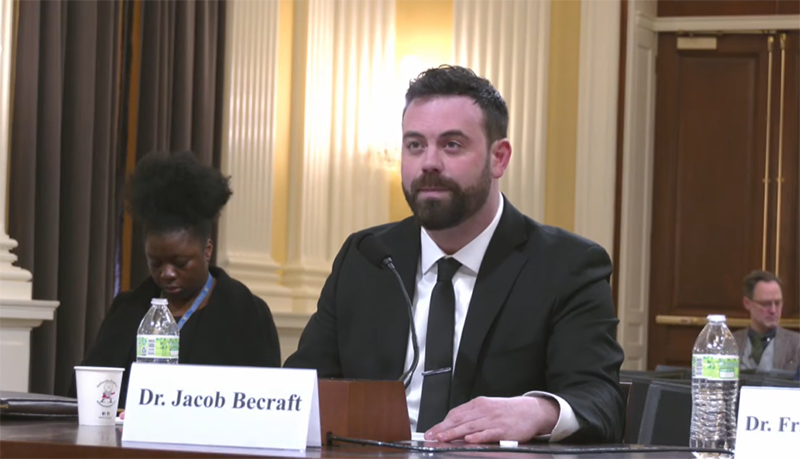
Speaking before the House Select Committee on China on March 18, Dr. Jacob Becraft, CEO of Strand Therapeutics and a BIO Board member, explained how China has enabled more rapid clinical trials, and recommended changes to keep America competitive.
The hearing outlined several challenges created by China’s concerted efforts to dominate global biotech and the biotech supply chain, and sought to identify solutions.
“In 2020, essentially zero percent of the world’s large pharmaceutical licensing deals involved Chinese-origin molecules. In 2025, that figure was 48 percent,” according to Committee Chair John Moolenaar (R-MI). He said China threatens to overtake American biotech and reduce our access to cures by dominating drug manufacturing, drug discovery, and clinical trials.
The importance of a clinical trial advantage
As of 2025, China leads the world in hosting clinical trials, Becraft testified. He said they have been able to do this by reducing the time it takes to go from ideation of a new drug to the first-in-human (FIH) clinical trials for that drug. In the U.S. this takes 2-3 years and in China it takes about a year, according to Becraft’s written testimony.
“The national security implications of this layer migrating overseas are straightforward,” Becraft testified.
“Innovation ecosystems tend to influence where production happens and biotechnology companies will increasingly cluster around the locations where human clinical data can be generated most efficiently,” he explained. “As investment into these pillars goes overseas, domestic counterparts are weakened. The resulting situation hands China growing unilateral control over an industry that saves millions of American lives every year.”
How China does it
In China—and in Australia, which is also becoming globally competitive in hosting clinical trials—they use decentralization to speed the process without compromising safety, Becraft explained.
“In the U.S., when a sponsor seeks to initiate a trial in humans (even a single site FIH trial), they almost always have to submit an investigational new drug (IND) application with the FDA,” a time-consuming process, he said. “In Australia and China, their regulatory agencies delegate the approval of these early phase trials to local institutional review boards (IRBs).”
Another way China gains an advantage in clinical trials is by aligning manufacturing more closely with clinical trials, an approach that “can allow therapeutic candidates to move rapidly from production to patient dosing,” Becraft said.
What America can do
The situation is urgent, but with decisive action, it can be remedied, according to Becraft. His written testimony recommends:
- Use legislative and regulatory measures to enable accelerated FIH trials, especially for small trials for patients for whom no other standard of care exists. “Establishing more flexible initiation pathways for these studies while maintaining FDA oversight and safety standards would reduce unnecessary delays and allow innovators to rapidly obtain early clinical signals.”
- “Early-stage manufacturing infrastructure must be better aligned with clinical trial systems. As emerging therapies increasingly rely on smaller manufacturing batches and rapid design-to-test cycles, closer integration between manufacturing and clinical environments will become essential.”
- “The U.S. must align regulators, funders, clinical systems, and innovators around a shared objective: compressing the timeline from therapeutic discovery to first-in-human dosing.” The success of Operation Warp Speed in addressing the COVID pandemic shows the benefits of this approach.