

For years, advocates have pushed for more research and investment in women’s health. Now, it may be paying off.
“I’m excited about the medicine starting to catch up with the conversation,” said Sabrina Martucci-Johnson, founder and CEO of Daré Bioscience, a clinical-stage company advancing innovations for vaginal health, at this summer’s 2026 BIO International Convention.
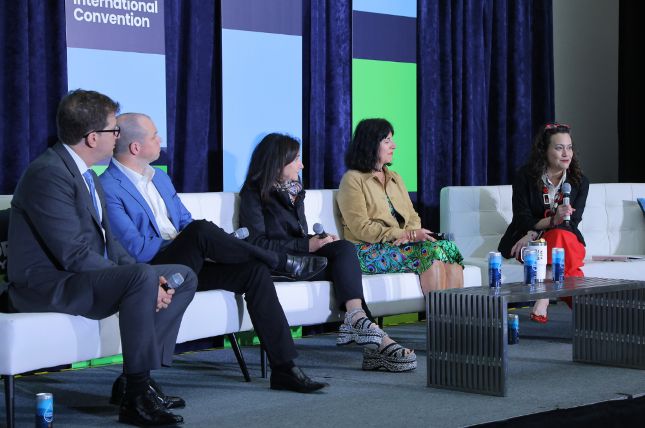
The panel, Are We There Yet: The Road to Clinical Development in Women’s Health, explored signs that women’s health is moving from a historically overlooked area into a more robust biotech ecosystem with increased investment, greater regulatory engagement, and growing attention to conditions that have long lacked research, let alone treatment options.
For Juan Camilo Arjona Ferreira, M.D., Head of Research & Development and Chief Medical Officer at Organon, the largest company dedicated to women’s health, those changes add up to a potentially transformative moment.
“I think we’re entering the golden era of women’s health,” he said. “The momentum is real.”
Building a women’s health ecosystem
The discussion was moderated by Michele Oshman, BIO’s Chief Patient Advocate and Head of the Patient Advocacy Center of Excellence. She also serves as executive sponsor of BIO’s board-level Women’s Health Task Force, whose mission is to help ensure a robust pipeline of biopharmaceutical innovation for women’s health.
Achieving that mission requires more than developing individual products.
Dr. Arjona Ferreira said Organon sees a role for itself beyond its own pipeline because no single company or institution can address all the gaps in women’s health. For example, the company launched an accelerator that gives selected emerging companies access to Organon resources for up to 9 months to help them reach their next milestone, with “no strings attached.”
Martucci-Johnson described a different experiment in expanding participation. Daré Bioscience created a public offering to allow individual investors to participate with as little as $250.
The idea, she said, was to give people a way to “vote with their wallet and say, I want to support the work that’s happening in women’s health.”
Finding a path through the clinic
Capital is only one barrier. Developing medicines in areas such as pregnancy can also mean navigating unprecedented regulatory pathways.
Mike Young, President and Co-Founder of Comanche Biopharma, which is developing an investigational siRNA medicine for preterm preeclampsia, said the U.S. Food and Drug Administration (FDA) “still remains the gold standard.” However, he pointed to regulatory approaches abroad that encourage earlier and broader conversations around development and approval.
In pregnancy specifically, Young said companies and regulators are sometimes developing the playbook together because relatively few novel drugs have been designed specifically for pregnant women.
Julie Krop, M.D., Chief Medical Officer of DiaMedica Therapeutics—which is also researching preeclampsia—has seen increased openness at FDA to weighing potential benefits alongside risks in pregnancy. This is a particularly complex area because treatment decisions can affect both the mother and the baby.
Martucci-Johnson said that even repurposing existing medicines—which can reduce some development risk because their safety and pharmacology are already understood—does not eliminate the need to work with FDA to establish an appropriate regulatory roadmap for a new indication.
Changing what, and how, we study women’s health
The panelists argued that progress requires changing how researchers, regulators, clinicians, and the public talk about women and their health needs.
Young described Comanche’s efforts to integrate patients and survivors throughout the company, including in leadership and advisory roles, and to have patients themselves help create materials and support structures for clinical research.
“Word choice is extremely important in this space,” he said, explaining how he pushed back on describing pregnant women participating in clinical research as “vulnerable.” Pregnancy is complex, and the way women are characterized can affect how researchers approach their inclusion in clinical research.
Martucci-Johnson discussed the importance of word choice in ending the stigma surrounding women’s anatomy and sexual and reproductive health.
Many of Daré’s products use vaginal drug delivery, making it difficult to describe the company’s work without using the words “vagina” or “vaginal.” She recalled recording a podcast and being told she needed to stop saying the word “vagina” or the program would not be able to air.
“I said, then you’re not going to be able to air it because I do not believe that I should be calling the vagina something other than the vagina. That is what it is,” she recalled.
When “words are not deemed as comfortable or appropriate, it creates more stigma,” making it difficult for women to discuss what they are experiencing, and for developers to create products that address their needs, she explained.
Why women’s health is overall health
What gives these experts optimism is that several pieces may now be coming together at once.
Dr. Krop pointed to growing interest from large pharmaceutical companies, government investment, and a broader focus beyond traditionally recognized women’s health categories into conditions including pregnancy and endometriosis. As more research and investment enter the women’s health ecosystem, she explained, each can reinforce the other, drawing more researchers, companies, and investors.
But Young cautioned that women’s health companies must make the same rigorous scientific and financial case as any other biotech company: a validated target, a compelling therapeutic approach, experienced drug developers, strong chemistry, manufacturing, and controls (CMC) and quality capabilities, and sound financial management.
For Dr. Arjona Ferreira, new data and technology could help address one of the fundamental reasons women were historically understudied: biological variability was treated as complexity that researchers could not adequately analyze.
“We have the tools to understand massive amounts of data, and this is the time for us to take the noise and make it signal,” he said.
The ultimate goal, he argued, is not to leave women’s health as a separate vertical, but to “bring women’s health back into overall health.”