
When it comes to fighting cancer, time is of the essence. But far too often, utilization management (UM) practices such as prior authorization and step therapy create precarious delays to care. These delays consume patients’ valuable time and money, create mental anguish, interfere with treatment decisions, and can often lead to worse health outcomes.
To capture the human impact of UM practices and to empower patients to effectively advocate for themselves, CancerCare, a national non-profit organization that provides emotional, practical and financial support for anyone affected by cancer, recently launched the Micro Insights, Macro Impact project.
The resources developed in conjunction with the project include the Focus Group Report, “Behind the Barriers: Patient Voices on Access to Treatment,” an Advocacy Toolkit, and three videos.
‘Fail first’ policies fail cancer patients
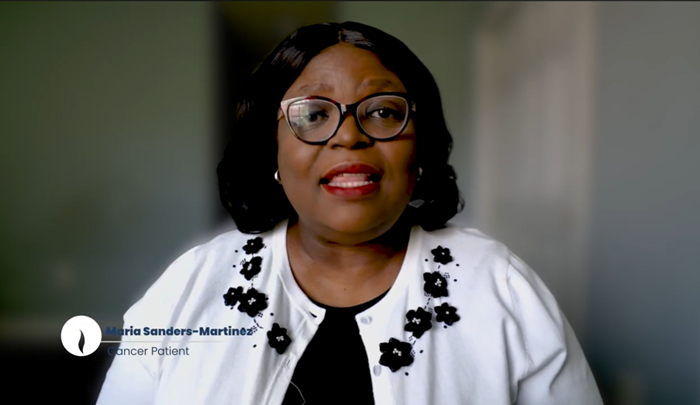
“My insurance company asked me to try and fail one treatment before I can get the actual treatment that I needed, and I was devastated by that,” said Maria, a patient living in New Jersey, with stage 3b uterine cancer. In a video testimony for Micro Insights, Macro Impact, Maria details her experience with step therapy, a utilization management practice where health insurance companies require patients to try other, often less effective, treatments first before they provide access to the treatment the patient was actually prescribed by their healthcare provider.
Maria’s case demonstrates the devastating impacts of step therapy on patients: only after experiencing harmful effects from the insurance-required treatment did Maria become eligible for the treatment her doctors prescribed. “I was then informed by doctors, Oh, you had the rash, so now you’re actually eligible for the better chemo. And I was like, What do you mean, better chemo? You have to have a side effect first before we allow you to advance to the better chemo. I was shocked,” explained Maria.
‘Prior authorization’ prioritizes insurers, not patients
Maria also experienced barriers from prior authorization, a process most patients know all too well. Prior authorization is a strategy used by health insurance plans that requires providers to obtain approval from the health insurance plan for a medicine before insurance will cover it. Oftentimes, prior authorization increases administrative burden on patients and providers and delays access to medically necessary treatments.
“It was really hard to get anything filled,” said Maria. “I had to wait until I got an authorization. I had a waiting period of about a month and a half. No treatment, no medication, just waiting for the new coverage.”
Maria’s experience is all too common, and costs patients and caregivers valuable time. As CancerCare’s 2025 Insurance Red Tape report found, among patients directly impacted by prior authorization protocols, 51% lost up to a full business day, 27% lost up to 2–3 business days, and 12% lost a full business week or more dealing with a single authorization incident. The Red Tape report labeled this issue as “time toxicity,” where a patient or caregiver spent substantial time communicating with insurers, gathering documentation, and appealing decisions. And patients are not just losing time out of their day, they are losing valuable treatment days. The report also found 29% of participants reported diagnosis delays, and 40% reported treatment delays due to authorizations. Additionally, 14% experienced abrupt coverage stoppages in the past year and 64% of those experienced treatment interruption.
The Micro Insights, Macro Impact project conducted a series of patient focus groups which captured poignant, real-life examples of the UM challenges and barriers documented in the Red Tape Report. These stories culminated in a telling report titled, “Behind the Barriers: Patient Voices on Access to Treatment.”
Like Maria, Steven, a patient from the suburbs of New York with stage four colorectal cancer, provided additional context to the focus group report through his video testimony about his UM challenges and how they affected his life. “They don’t know who you are. They don’t care who you are. You’re just a number,” said Steven. “When you have cancer, it’s stressful enough. And when you’re dealing with insurance companies, it’s a double whammy, right? From prior authorizations to delays to denials, they throw a bunch of terms at you, but you know no one bothers to translate what it actually means. How do I navigate through this?”
“This isn’t a game. This is my health,” said Steven, “Why is this so difficult? It can be a bit dehumanizing. I think it’s important for the decision makers to really think about it from a more humane perspective. The system’s broken, and I think we could do a better job in making people’s lives easier.”
In a third video, “What It Feels Like When Insurance Stands Between You and Your Care,” three cancer patients succinctly and boldly speak about the unacceptable consequences of UM on their lives and what they would say to the people who denied their coverage.
Improving access and affordability
Individuals living with cancer deserve better. Utilization management practices are causing real harm to patients for whom time is of the essence.
“It is a nightmare waking up every day wondering if some people halfway across the country will approve what my doctors have said is my only chance,” said a patient in the Micro Insights, Macro Impact report.
Ultimately, many of the barriers imposed by utilization management are wholly unnecessary. “Among the 1,201 respondents who experienced prior authorization,” the Red Tape report states, “95% ultimately had their most recent request approved—89% after initial review and 6% after appeals—yet delays still frequently occurred, even when the initial request was approved.” These findings put in question the premise behind utilization management – WHY the initial treatment was denied at all in the first place, which jeopardizes the health of cancer patients who cannot afford to wait.
Empowering patients
Another key takeaway of the Micro Insights, Macro Impact project is the importance of empowering patients and caregivers to engage in policy advocacy by sharing their personal stories with decision makers. To help facilitate this goal, the project’s Advocacy Toolkit helps familiarize patients with UM health policy terms and provides an easy-to-understand framework for people to reach out to policy makers via letter writing, social media posts, and meetings. The Toolkit provides “how-to” examples of the different policy advocacy methods to help demystify the process and boost the confidence of patients and caregivers.
Micro Insights, Macro Impact marks a critical step forward in moving the needle toward meaningful utilization management reform, showcasing the people and stories behind the numbers.
“Utilization management practices are being implemented in ways that harm patients. Micro Insights, Macro Impact spotlights the shared challenges that disrupt patients’ daily lives from diagnosis and beyond. These stories put a human face to the data, point to where policy change is needed most, and empower patients and caregivers to help drive necessary change” said Kim Czubaruk, JD, Vice President of Policy, CancerCare.
If you are interested in learning more, you can visit https://www.cancercare.org/, where you can read Micro Insights, Macro Impact, the 2025 Red Tape Report, and other CancerCare resources.
Additionally, if you are a patient advocate, consider registering for the Biotechnology Innovation Organization’s Patient Advocacy Changemakers Event (PACE): an empowering and inspiring event focused on breaking barriers to access and ensuring that innovative medicines reach the patients that need them.