
A scientist and a financier walk into a bar…
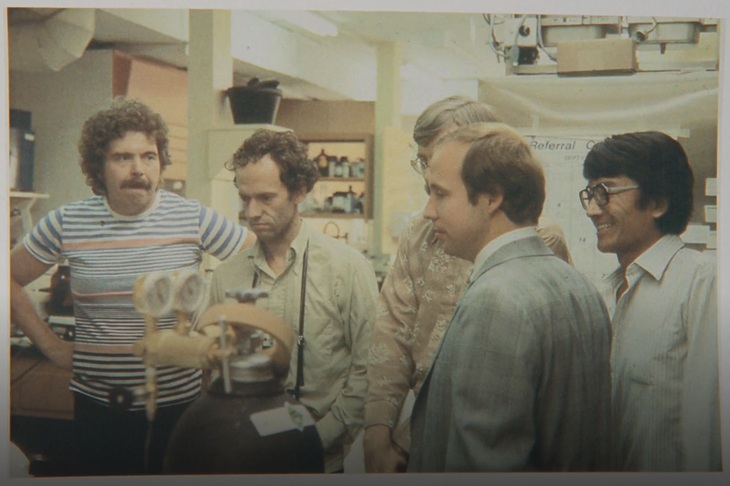
It sounds like the setup to a joke, but in the case of molecular biologist Herbert Boyer, Ph.D., and venture capitalist Robert Swanson, it was the setup for an entirely new industry: biotechnology.
The two founded Genentech, considered the “original biotech” company, which is celebrating its 50th year. And the biotech industry as a whole is looking back on its last half-century and reflecting on the breakthroughs that have saved and improved the lives of patients worldwide. To mark the moment, the documentary “The Impossible Bet” was produced in collaboration with The New York Times’ T Brand Studio to explore Genentech’s growth and impact and reflect on the role patients have played in the industry’s development.
From the first human insulin to a breast cancer breakthrough
Boyer and Swanson’s first conversation ultimately led to the creation and commercialization of recombinant DNA (rDNA) technology to engineer bacteria to produce vital human proteins. That was a game-changer for diabetes patients.
“At the time, there was a really urgent patient need. Insulin was derived from animal pancreases, and there wasn’t enough that could be produced to serve all the diabetic patients around the world,” Ashley Magargee, CEO of Genentech, explained in the documentary.
But thanks to Boyer’s groundbreaking work researching recombinant DNA, and Swanson’s ability to fund and commercialize it, Genentech was able to use recombinant DNA technology to clone and synthesize human insulin and the E. coli gene.
“For the first time, we had human insulin,” Magargee continued. “Diabetic patients were able to get a sustainable supply of the medicine that they would need. It was such a watershed moment because it proved that Genentech could exist, and that started, really, this wonderful industry of biotech.”
The insulin breakthrough was followed by the development of a drug to treat breast cancer: Herceptin.
HER2-positive breast cancers—accounting for 20% of breast cancers—were once a death sentence: “more aggressive, more likely to spread, more likely to recur,” explained Levi Garraway, Executive Vice President, Head of Global Product Development and Chief Medical Officer at Genentech..
Heceptin changed that, and is still used today.
This paved the path toward targeted therapy, which has been one of the most important innovations in rare disease.
“The most important implication of targeted cancer treatments was that if we can understand the biology of a disease at a detailed molecular level, that understanding can unlock an entirely new era of transformative medicines,” said Garraway.
Compassionate Use and the importance of the patient voice
During the clinical trial stage of Heceptin’s development, the scientists at Genentech looked out their window and saw protestors. They were all breast cancer patients.
“Really, they were saying, We need to live. They were pleading to live. Why can’t you just give me the drug? I will take all the risk,” explained Magargee.
Genentech invited them in.
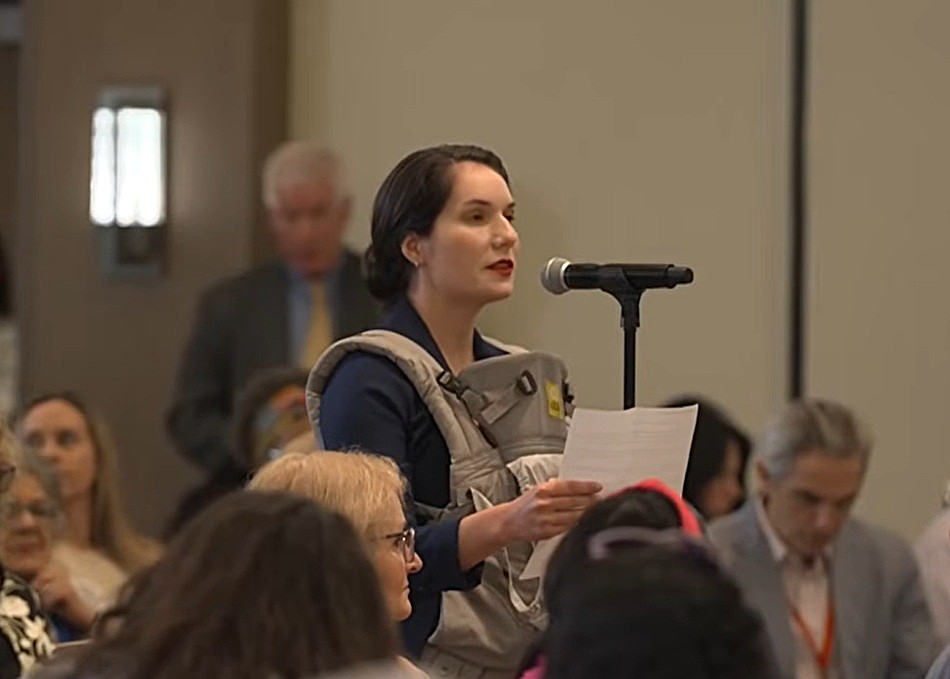
“We brought them in and started talking to them about how we could develop a lottery system for compassionate use,” Margaree recalled. Compassionate Use allows patients who have life-threatening diseases, and no other options, to receive an investigational medicine before it comes on the market.
“The outcome of that was a recognition on the part of Genentech that these patient voices are, in fact, incredibly important,” said Margaree. “We’ve come a long way in bringing patients into our research early on to make sure that as we’re working in the drug discovery, drug development phases, we actually are bringing the voice of the patient into everything we do.”
This patient-informed mindset has shaped decades of work since—whether designing and conducting clinical trials, speaking to the Centers for Disease Control and Prevention, or organizing Hill Day in Washington, DC, where patients can speak directly to policymakers about their needs.
AI as biotech’s next frontier
As the documentary explains, the road to biotech innovation has never been easy.
“You have to follow the science wherever it may lead you, in order to make the next leap and get to the next right answer,” said Aviv Regev, Head of Research and Early Development at Genentech.
While the biotech industry has completely changed the landscape of healthcare on the planet and continues to move at lightspeed, innovation is nonetheless an uphill battle.
“We still have 90% of all molecules that enter clinical studies fail, and that’s an incredible failure rate,” said Magargee on the BIO Mainstage at the 2026 International Convention. “And it’s because drug discovery is very, very difficult – every aspect of it is very difficult.”
As the biotech industry reflects on the past 50 years, it is also looking ahead to what comes next, particularly to artificial intelligence (AI)—not to replace scientists, but to assist them.
“We need more scientists than we ever have before, because when they’re equipped and empowered with these tools, they’re asking bigger and more important questions than have ever been able to ask before,” said Magargee.
“It’s going to be not just faster computers or better algorithms or more interesting science,” concluded Magargee to applause, “it’s going to be so many more birthdays for people, it’s going to be so many more memories, and so much more time with your loved ones, and that’s going to be the impact that we’re going to have together.”