Skip to content


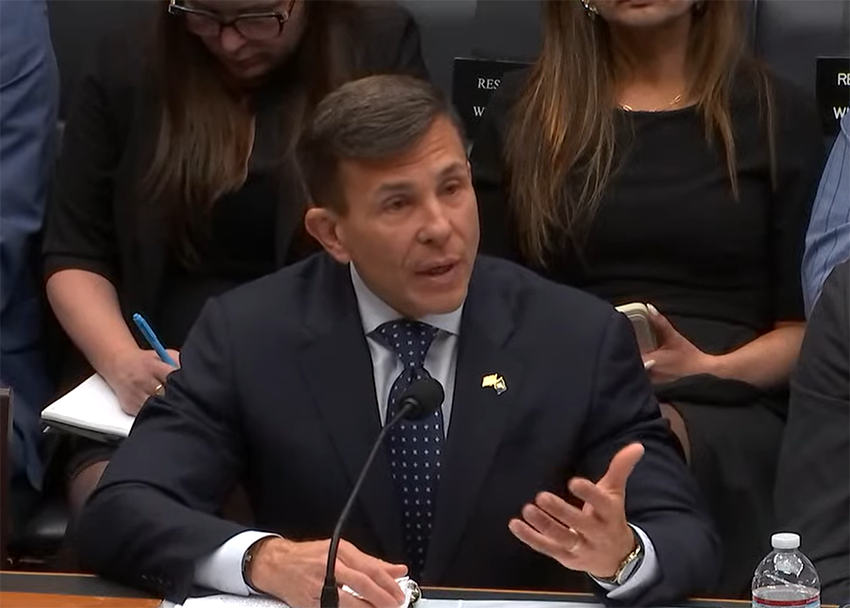
Pharmacy benefit managers (PBMs) were identified as a major driver behind higher prescription drug costs in a congressional hearing that featured testimony from BIO President & CEO John F. Crowley.
Representing the membership of the Biotechnology Innovation Organization (BIO) in the House Energy & Commerce Health Subcommittee’s Feb. 11 hearing, Crowley explained how Congress can help make drugs more accessible while maintaining U.S. biotech leadership.
He recommended reforms to improve regulatory review, simplify our healthcare system, remove barriers to access, speed clinical trials, and increase research funding.
The hearing, second in a series on lowering health care costs, focused on prescription drugs and featured nine witnesses representing the entire pharmaceutical supply chain. Most of the witnesses singled out PBMs as being the main cause of rising drug costs.
Many members of Congress agreed. They praised PBM reform achieved by Congress the week before but said further measures are needed, as did Crowley.
“The United States is the only country in the world where 50% of every dollar spent on medicines goes to middlemen, mostly toward the PBMS,” Crowley said in his opening statement.
The hearing touched on other important issues, like strengthening the Food and Drug Administration (FDA), improving clinical trials, vaccination, preparedness, and the risks of price control efforts. Throughout the discussion, Crowley and others also highlighted the importance of a strong biotech ecosystem, able to compete with China.
PBMs called uncompetitive
Subcommittee Chair Morgan Griffith (R-VA) was the first of many lawmakers highlighting that the biggest three PBMs’ grip on the prescription drug market is exacerbated by their vertical and horizontal integration with insurers, pharmacies, and other health care concerns. He rejected claims by witness David Marin, the representative of the PBM association, that PBMs thrive on competition.
“If you like competition, do you think the Federal Trade Commission should break up the three largest PBMs that control 80% of the market?” Chair Griffith asked.
Crowley laid out how PBMs profit by raising prices and hindering patient access to drugs they need, going into further detail in his written testimony submitted for the hearing.
“PBMs play a central role in determining what medicines patients have access to and what they pay out of pocket,” he wrote. “Investigations by Congress, the Federal Trade Commission and other experts have warned that PBMs engage in business practices that make medicines unaffordable.”
To supplement the PBM reforms passed the week before, Crowley highlighted other worthy proposals, such as the DRUG Act, H.R. 2214, which would do more to delink PBM fees from drug prices. “Policymakers should also require that any savings PBMs negotiate be passed through to patients at the pharmacy, as outlined in the Pharmacists Fight Back Act, H.R. 6609,” he wrote.
Joining many others calling for PBM reform, Rep. Nanette Díaz Barragan (D-CA) passionately spoke of her sister’s challenges with affording cancer drugs. “You are part of the reason why people suffer and what’s making it harder for people with cancer and HIV to get their drugs,” she told witness Marin, the PBM representative.
Rep. Earl “Buddy” Carter (R-GA), sponsor of the recently passed PBM reform legislation, cited a 77,000% PBM markup on the pulmonary hypertension drug tadalafil (Adcirca) in 2022 and agreed more legislation is needed.
FDA and other federal programs
Crowley was asked frequently about potential improvements to the FDA. He stressed the importance of consistency and expertise.
“We need a modernized and reformed FDA, and the core of that has to be the leadership and the staff,” Crowley said during discussion with Subcommittee Ranking Member Diana DeGette (D-CO). “We’ve seen reductions in force. And I’m hopeful, confident, that we’ll start to see more and more people coming to the FDA, particularly scientific reviewers, medical reviewers, inspectors.”
Crowley also called for reforms to streamline the clinical trials process. Rep. Troy Balderson (R-OH) asked him how to achieve such reforms, to compete with China, where clinical trials are cheaper.
“I think we could look to what’s directly under FDA control,” Crowley answered. “For instance the requirements to get into clinical studies become overly bureaucratic.” He gave the example of the FDA addressing outdated rules on animal testing, which can now be replaced with cheaper, more humane lab tests.
“The new guidance from the FDA last year reduced the requirement without at all threatening patient safety,” Crowley said.
Crowley began his biotech career by founding a company that developed the first treatment for Pompe disease, a rare and debilitating condition afflicting his children. He was asked by Reps. Gus Bilirakis (R-FL) and Kevin Mullin (D-CA) how federal officials could help fight rare disease. Crowley urged certainty and predictability in the FDA, and legislation to encourage research and improve access to medicines.
Rep. Kim Schrier (D-WA) noted the FDA’s decision the day before to decline review of an mRNA flu vaccine, and other health agency actions that could harm faith in vaccines, and asked Crowley about the impact on innovation.
“We share your belief in the importance of vaccines. How in the world are measles coming back?” said Crowley, adding that BIO has a task force dedicated to advancing vaccines. “We are concerned about shifting standards. We need consistency and predictability from our regulatory bodies. Perhaps no biotechnology has done more to improve human health than vaccines.”
Rep. Schrier also noted proposals to close the National Vaccine Injury Compensation Program (VICP), which builds confidence in vaccines by ensuring patients are compensated in the extremely rare case of harm being done by a vaccine.
“The VICP has worked, as you indicate congresswoman, for decades,” Crowley said. “Anything that threatens that system, we’re very concerned about.”
Ranking Member DeGette said she was worried about a reduction in research grants and asked Crowley about the importance of the National Institutes of Health (NIH) in fostering a vibrant innovation ecosystem.
Making new medicines “begins most often with great academic research, often funded by the NIH,” Crowley said. “That’s part of the foundation of the great science in America. It’s what’s brought us to the lead in biotechnology.”
MFN and simplifying the system
Several members of Congress questioned the effectiveness of a Most Favored Nation (MFN) approach to set U.S. drug prices based on prices in other countries.
Rep. Diana Harshbarger (R-TN) asked why we focus on drug prices, when other parts of health care are driving the affordability crisis. She shared Bureau of Labor Statistics figures showing “overall prescription drug price growth between 2015 and 2025 has remained below general inflation and below price increases in other major health care sectors.”
Representative Jake Auchincloss (D-MA) questioned the administration’s price control mechanisms, including the Global Benchmark for Efficient Drug Pricing (GLOBE) and Guarding U.S. Medicare Against Rising Drug Costs (GUARD) models. He said they would further add rebates to a value chain that already has too many—without lowering prices.
Crowley agreed that MFN won’t work.
“We must remember that the United States already is the most favored nation when it comes to developing groundbreaking new medicines that transform the standard of care for patients,” he said. “Codification of MFN policies risks importing socialized medicine and harming much of what makes American biotech innovation exceptional, while failing to address the real drivers of the affordability crisis in our country.”
The solution, Crowley said, is to simplify the healthcare system. His written testimony explained that this would involve addressing the “abusive practices of middlemen, insurers, and tax-exempt hospitals.”
He recommended specific reforms of the top three challenges, PBMs, hospital costs, and the 340B program, “which diverts more than $80 billion into hospital coffers” without helping patients as originally intended.
China and preparedness
The threat that China poses to American biotech leadership, and the need to encourage innovation that drives that leadership, were frequent topics during the hearing.
“The Chinese Communist Party’s regime is exerting greater control over pharmaceutical supply chains, data flows, and intellectual property,” Crowley’s written testimony warned. “These actions threaten not only U.S. competitiveness, but also the long-term health security of American patients and that of our allies.”
Rep. Lori Trahan (D-MA) noted the rapid expansion of China in the biotech sphere.
“China has a clear strategy to lead the future of medicine development, and their role in the global clinical trial pipeline has grown dramatically over the last decade,” she said.
Rep. Trahan urged her colleagues to join bipartisan reauthorization of public health preparedness legislation, as they had done in the past. The Pandemic All Hazards Preparedness Act (PAHPA), which contains measures to prepare for bioemergencies, ranging from pandemics to bioterrorism, is awaiting reauthorization.
Rep. Trahan asked Crowley about the importance of investing in platform technologies that enable rapid response to public health threats.
“Preparedness is what it’s all about when it comes to the next natural threat like COVID that we may see—the flu, whatever it may be—or a bad actor in bioterrorism,” Crowley said. He gave the example of mRNA, a platform technology that was years in the making, but was ready when we needed it to fight COVID.
These technologies must be supported to keep America competitive, he said. He asked Congress to understand that, along with scientific innovation, there is also a necessity for innovation in making drugs accessible and affordable.
“We need to make sure that every American has access to these biotech miracles and that no one—no one—ever goes a day without the medicines they need,” Crowley said.
Watch the opening statement of BIO President & CEO John F. Crowley here.