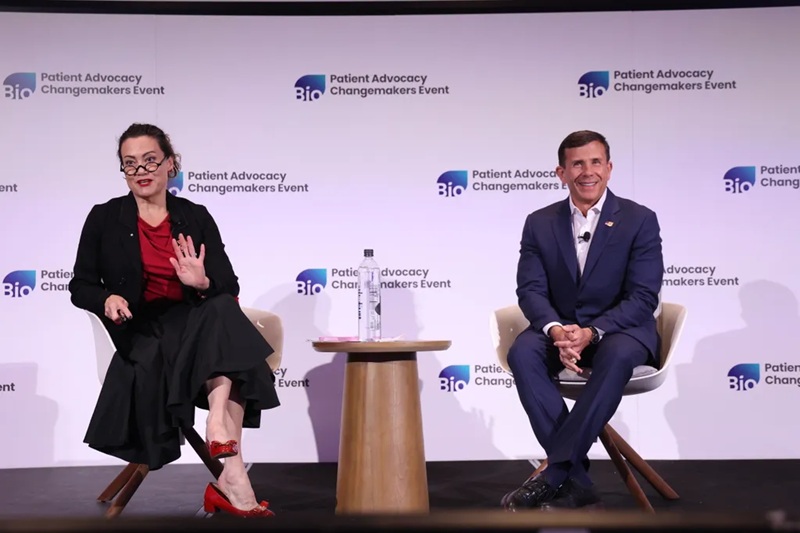

Patient advocates are no strangers to the sometimes painful challenges of promoting access to medicines and treatments. The key, they say, is staying two steps ahead.
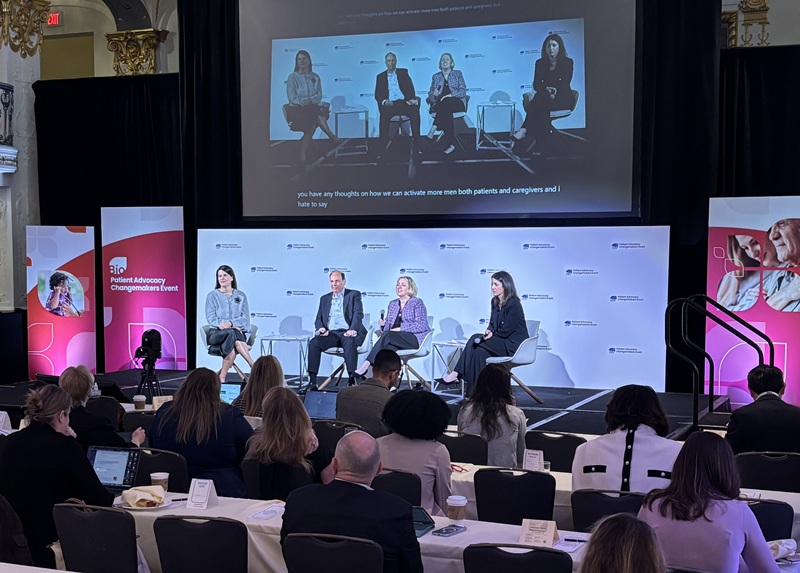
“We’ve all experienced decades of incredible innovation as it relates to the biopharmaceutical community,” Kate Mevis, Associate VP of U.S. Federal Policy at Merck told an Oct. 22 session of the BIO Patient Advocacy Changemakers Event (PACE) in Washington, DC. “But we really need to make sure that access, coverage, cost, and the policies that govern those, keep pace with this innovation.”
Mevis moderated the PACE panel called 21st Century Access: Pain Points for Patients, which investigated barriers to patient access.
So what have been patient’s biggest pain points in recent years? And what are advocates doing to relieve the pressure?
Utilization management remains a major pain point
“Eighty percent of people living with psoriasis or psoriatic arthritis report that they have been subjected to some sort of utilization management,” said Leah Howard, President and CEO of the National Psoriasis Foundation. “That statistic is even higher in Medicare. About 90% of patients accessing therapies through Medicare experience utilization management.”
Howard said she’ll often ask a gathering how many audience members have experienced step therapy, prior authorization challenges or other forms of utilization management. “Literally, every single hand in the room goes up,” she said.
These utilization management challenges are compounded by insurers using copay accumulators and maximizers, said Carl Schmid, Executive Director at the HIV+Hepatitis Policy Institute.
“Patients rely on copay assistance for over $20 billion to help us pay for our drugs. That’s a lot of money,” Shmid said. “But unfortunately, pharmacy benefit managers (PBMs) and insurers are stealing around $7 billion of that through copay accumulators and maximizers.”
And these two pain points together are often even more magnified by the fact that patients are rarely dealing with just one disease.
“Most people have multiple diseases,” said Pam Traxel, SVP, Alliance Development and Philanthropy at the American Cancer Society Cancer Action Network. “So one of the things that’s so important about resolving utilization management is it is not just that a patient is studying one time to get access to one medicine. If you have a chronic disease, you are doing this throughout your entire life in many different areas.”
Pain points in the real world
And these issues are not just hypothetical, they are happening in real ways.
“Earlier this year, one health insurance company came out with their policy for 2026 that took a treatment that was approved nine years ago for psoriasis and psoriatic arthritis, and said that for a patient on their formulary to access that treatment, they would have to go through 14 other therapies, over 42 months to get to that one that their clinician wanted them to use,” explained Howard. “And this wasn’t because this was some brand new therapy that had just been approved.”
Luckily, the National Psoriasis Foundation and their partner groups in Pennsylvania, where this plan was located, succeeded in getting the insurer to reduce the list to five alternative therapies and 15 months, a noted improvement on the original plan.
But as Shmid pointed out, there is still work to be done on many advocacy fronts.
Shmid’s organization, the HIV+Hepatitis Policy Institute, filed a discrimination lawsuit three years ago after finding that some insurers were not covering the HIV drugs people needed, or were placing all HIV drugs on the highest formulary tier—a clear violation of the Affordable Care Act, as Bio.News reported.
The HIV+Hepatitis Policy Institute won their suit, but the problem now is that the ruling is not being enforced.
“I get a lot of calls from people who are faced with these thousands and thousands of dollars in charges, and they say, ‘Wait, I’m looking at the literature. You won. Why am I being charged this?’ And they’re angry,” Shmid said.
“It’s hard enough to pay their premiums, and now they’re being stuck with thousands of dollars of bills that they didn’t expect,” he continued. “We cannot give up on this issue. We have to hold the federal government accountable. We have to hold the insurers and PBMs accountable for what they’re getting away with right now.”
Pushing back against the pain
But advocates see reasons for hope.
“I think the American people have reached the boiling point on this issue,” said Shmid. “It’s not just the patients. It’s not just the caregivers, our families. It’s not just the providers. It’s members of Congress. Everyone is experiencing this prioritization or step therapy.”
The challenge of advocacy, however, is the ability to maintain momentum on established issues, while also anticipating new ones.
“There needs to be an urgency around our desire to remove these barriers because as we are fighting the original issue, the insurers are onto something totally different,” said Traxel.
At its core, the driver of patient advocacy is to ensure that biotech innovation can actually serve the common good it is intended for.
“When people talk about the promise of drug discovery and the great developments that happen, the fact that those treatments are sitting on the shelf and the patient can’t access them makes it feels like this whole process is for naught,” said Howard. “We can’t let that happen.”